Most people think of termites as a spring pest, but in South Florida, termite problems are a year-round concern. Although they swarm in late March and early April, they do not hibernate, and they feed in all seasons, even winter, in places where it does not get cold enough to slow them down. The only way to stop a termite infestation is to eliminate the termites before they take over. Read on to learn about the different types of termites you might encounter in your South Florida home.
Why Termite Identification Matters
You may think all termites are the same and therefore require the same type of treatment. However, different termite species behave differently and hide in different areas of the home. This makes accurate identification essential before choosing a type of termite elimination. Some termite treatments are more targeted, while others focus on the whole home to ensure a complete clearing out of an infestation.
Formosan Termites
These termites are one of the most destructive termite species in South Florida. They build large underground colonies, forage aggressively, and enter homes through structural gaps. While most termites stick to wood, Formosan termites are less picky and will chew through anything that has a cellulose basis, with drywall being a common example. Formosan termites leave evidence like mud tubes, swarming activity, and rapid damage to structural wood.
Drywood Termites
Drywood termites are some of the most prevalent in South Florida right now. They live directly inside dry wood, often infest attics, trim, furniture, and wall voids. Drywood termites leave behind telltale frass pellets that are often mistaken for sawdust or sand. Unlike subterranean termites, they do not need soil contact to find their way into your home.
Subterranean Termites
As their name suggests, subterranean termites live underground, and that’s where they enter your home. They depend on moisture and contact with soil to make their way into walls and attics, where they build mud tubes to travel. While there, they cause structural damage by feeding on support beams, flooring, and framing. These termites will not leave frass behind, but they can be found by identifying their mud tubes.
Dampwood Termites
While dampwood termites are less likely to infest a home than the species mentioned above, they can be found in places where wood stays persistently damp. When they are found in homes, it’s typically around leaks, water-damaged wood, and decaying structural areas.
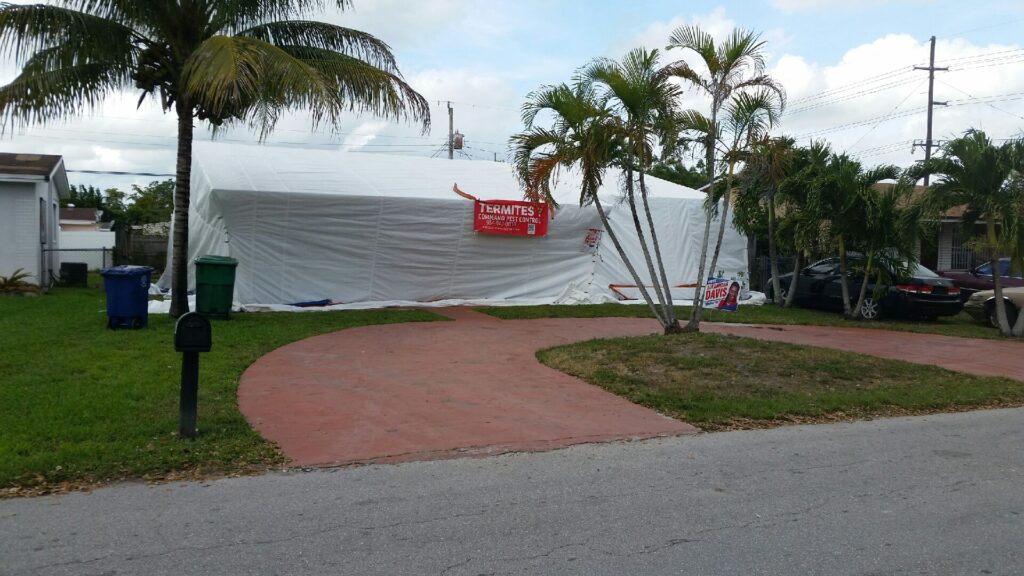
The tips above can help you identify the type of termites that have infested your home. However, it takes professional expertise to accurately determine the scope of the infestation. At Command Pest Control, we offer localized spot treatments for isolated termite activity, tent fumigation for widespread infestations, and no-tent fumigation for homes and businesses that need fumigation but aren’t shaped in a way that a tent can fit over them. If you are in need of a termite inspection in the Fort Lauderdale area, give Command Pest Control a call at (954) 943-0008 or contact us online.